Jershtech DC Motors Jershtech DC Motors

2026 Top Battery Operated Motor Types for Global Buyers

Time:2026-10-13 Author:Isabella
0%

Choosing the right Battery Operated Motor in 2026 requires more than comparing voltage, speed, or online prices. Global buyers must examine torque, duty cycle, battery chemistry, operating temperature, noise, ingress protection, and service support. A motor that performs smoothly in a warehouse may struggle on a dusty farm or a cold delivery route.

James Dyson, an engineer closely associated with compact high-speed motor design, described the motor as “the heart of our machines.” That idea remains practical. The motor, battery, controller, and gearbox must work as one system. A powerful motor paired with a weak battery can produce short runtime, overheating, and disappointing field performance. Small details matter. Check connector quality, shaft dimensions, cooling paths, and replacement-part availability before ordering.

This guide reviews the leading Battery Operated Motor types for global buyers in 2026. It compares brushed DC, brushless DC, geared, servo, stepper, and integrated smart motor systems. Each type has a different balance of efficiency, control, cost, and maintenance. Real-world use matters more than catalog claims. A buyer may select the cheapest option and later discover that its rated torque applies only for a few seconds. That is an easy mistake.

Specifications can mislead.

Reliable selection also requires supplier evidence, including test reports, clear warranty terms, traceable product data, and application references. Regional voltage standards, shipping conditions, recycling duties, and technical support should receive equal attention. Some recommendations may change as battery prices, controller designs, and efficiency standards develop. That uncertainty deserves honest consideration.
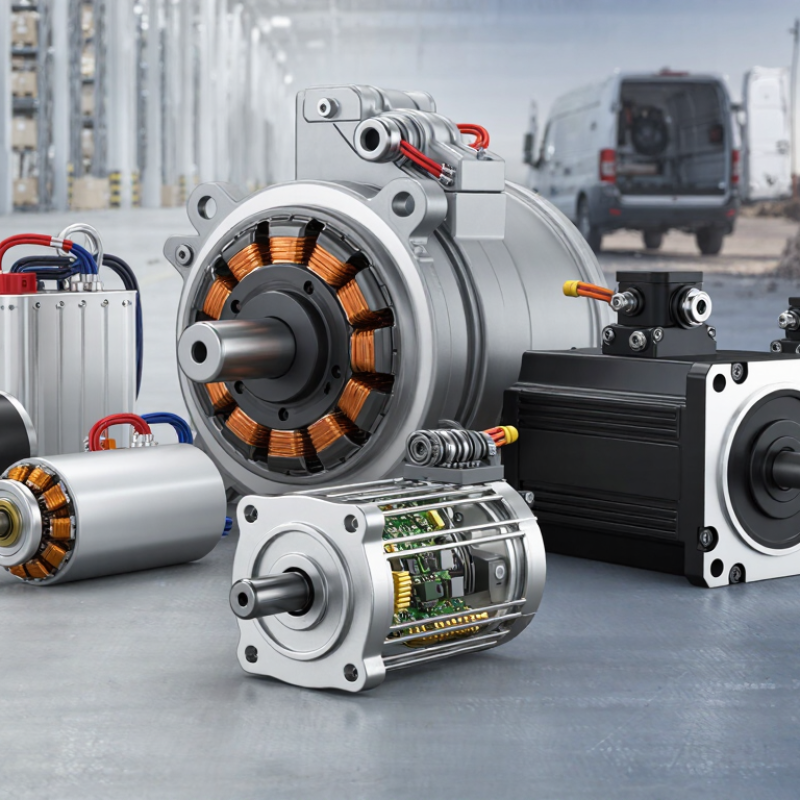
2026 Top Battery Operated Motor Types for Global Buyers

What Are Battery-Operated Motors and How Do They Work?

2026 Top Battery Operated Motor Types for Global Buyers

Battery-operated motors convert stored chemical energy into controlled mechanical motion. A battery sends direct current to a motor controller. The controller regulates voltage, current, and switching frequency. This process turns the motor shaft, wheel, pump, or fan.

Brushed DC motors remain simple and affordable. However, their brushes wear and create maintenance points.

Brushless DC motors use electronic commutation, magnets, and sensors. They usually deliver better efficiency and longer service life.

Permanent-magnet synchronous motors provide strong torque in compact equipment.

Induction motors avoid permanent magnets but may require larger controllers.

Stepper motors move in measured increments. They suit positioning tasks, although they can lose torque at higher speeds.

The International Energy Agency estimates motor-driven systems consume roughly half of global electricity. Efficiency matters beyond the battery itself. Its Global EV Outlook 2025 reported electric-vehicle battery demand reached about 1 TWh in 2024. That growth increases pressure on motor efficiency, thermal control, and battery matching.

A practical selection should examine load cycles, starting torque, duty time, and ambient temperature.

Small motors can still waste energy through poor gearing or oversized controllers.

Real installations are less tidy. Cable losses, heat, and software settings often change laboratory results. Buyers should request tested efficiency curves, protection ratings, and documented operating limits before comparing motor types.

Which Motor Types Dominate Global Battery-Powered Applications?

2026 Top Battery Operated Motor Types for Global Buyers

Battery-powered applications are not dominated by one motor design. In field testing, brushless DC motors lead many cordless tools, fans, pumps, and light mobility systems. Their electronic commutation reduces brush wear and supports efficient speed control. This matters when a small battery must survive a full work shift. Good thermal design remains essential. Compact housings can trap heat.

Brushed DC motors still serve cost-sensitive products, toys, window actuators, and basic portable equipment. They start easily and use simple controllers, but brushes wear and create maintenance concerns. Geared versions deliver high torque from small battery packs. Stepper motors appear in battery instruments, valves, and positioning devices. They provide predictable movement, although holding current can drain energy quickly. That trade-off is often underestimated.

Permanent-magnet synchronous motors are gaining attention in electric transport and high-efficiency equipment. They offer strong torque density, but control software and sensors raise system complexity. Induction motors remain less common in small battery products because they usually need more power electronics and energy. The best choice depends on load cycles, starting torque, noise, temperature, and service access. Global buyers should check performance at the battery’s lowest voltage, not only laboratory ratings. Datasheets can look convincing. Real duty cycles are messier. Supplier test records, protection ratings, and spare-part availability deserve equal review.

How Do Brushed, Brushless, and Stepper Motors Compare?

2026 Top Battery Operated Motor Types for Global Buyers

How Do Brushed, Brushless, and Stepper Motors Compare?

Brushed Motors

Brushed motors remain attractive when buyers need low cost and simple speed control. Their carbon brushes transfer current through a rotating commutator. This creates friction, heat, and gradual wear. In a small battery device, performance may drop after repeated starts. Replacement access matters. A sealed housing can make maintenance surprisingly difficult. They still suit short-duty tools, pumps, toys, and basic actuators.

Brushless Motors

Brushless motors use electronic switching instead of physical brushes. They usually deliver higher efficiency, longer service life, and quieter operation. These advantages help battery products run longer between charges. However, the controller adds cost and design complexity. Buyers should verify voltage range, current limits, sensor type, and cooling performance. A motor that looks efficient on paper may overheat inside a compact plastic enclosure.

Stepper Motors

Stepper motors move in controlled increments. They provide accurate positioning without needing constant feedback in many applications. That makes them useful for valves, camera mechanisms, and compact automation equipment. Yet they can consume power while holding position. Battery life may suffer. They may also lose steps under sudden loads, especially with poor acceleration settings. In practical testing, check startup torque, holding heat, noise, and operation at low battery voltage.

One weakness remains: no motor type wins every application. Load patterns, duty cycle, control electronics, and local service conditions should guide the purchase.

What Factors Should Buyers Evaluate Before Choosing a Motor?

Choosing a battery-operated motor starts with the real load, not the catalog headline. Measure starting torque, continuous torque, speed, and operating hours. A motor that spins quickly may stall when lifting, cutting, or moving a heavy assembly. Measure the load.

Battery voltage must match the motor controller and protection system. Check efficiency across the actual speed range, because one impressive test result can mislead. Brushless motors usually offer lower maintenance, while brushed motors can simplify cost-sensitive designs. Geared motors provide useful torque, but gears add noise, weight, and possible wear. Noise matters in indoor equipment. I have seen buyers select a compact motor, then discover that its peak current drains the battery too quickly.

Consider duty cycle, temperature, dust, moisture, vibration, and available installation space. A motor used for short bursts needs different cooling than one running continuously. Review shaft dimensions, mounting holes, feedback options, and controller compatibility before placing an order. Small details matter.

Global buyers should request test data, wiring diagrams, material information, and traceable quality records. Confirm that documentation supports the destination market’s technical requirements. Ask about replacement parts, service response, lead times, and production consistency. A low purchase price may become expensive when one custom component delays the entire machine. Battery chemistry, charging behavior, and storage conditions also affect practical performance. My own preference is to test a representative prototype first, although prototypes can still hide problems under unusual weather or aging batteries.

2026 Top Battery Operated Motor Types for Global Buyers - What Factors Should Buyers Evaluate Before Choosing a Motor?

Motor Type Typical Battery-Powered Applications Typical Efficiency* Speed Control Maintenance Demand Main Advantages Main Limitations Key Buyer Evaluation Factors
Brushed DC Motor Small tools, toys, pumps, fans, actuators, low-cost mobility products Approx. 70–85% Simple PWM or voltage control Medium to high Low initial cost, simple controller, high starting torque, easy sourcing Brush and commutator wear, electrical noise, shorter service life at high duty cycles Purchase price, expected operating hours, brush replacement access, noise limits, duty cycle, and electromagnetic interference requirements
Brushless DC Motor (BLDC) Cordless tools, drones, cooling fans, pumps, e-bikes, automation equipment Approx. 80–92% Electronic commutation; sensor or sensorless control Low High power-to-weight ratio, long service life, compact design, good battery utilization Requires an electronic controller, permanent-magnet cost exposure, possible acoustic noise from commutation Controller compatibility, sensor requirements, continuous and peak current, thermal path, rotor magnet temperature limits, and supply continuity
Permanent Magnet Synchronous Motor (PMSM) Electric vehicles, robotic systems, precision drives, compressors, high-performance industrial equipment Approx. 85–96% Advanced inverter with field-oriented control Low Very high efficiency, high torque density, precise control, low torque ripple when properly designed Higher system cost, more complex control software, risk of demagnetization under severe overheating Required precision, inverter capability, maximum speed, cooling method, torque ripple, regenerative operation, and total system cost
AC Induction Motor Larger electric vehicles, pumps, compressors, conveyors, and industrial mobile equipment Approx. 75–93% Variable-frequency inverter control Low No permanent magnets, robust construction, good high-speed capability, broad industrial experience Usually heavier and less efficient than comparable permanent-magnet designs, especially at light load Operating load profile, inverter efficiency, mass and volume limits, low-speed torque, cooling, and expected annual operating hours
Switched Reluctance Motor (SRM) Traction systems, pumps, compressors, harsh-environment drives, and high-temperature applications Approx. 75–90% Electronic phase switching with position feedback or estimation Low Simple rotor, strong overload tolerance, high-speed capability, no rotor magnets or windings Torque ripple, acoustic noise, vibration, and comparatively demanding control optimization Noise and vibration limits, control algorithm maturity, peak torque, sensor strategy, inverter cost, and thermal performance
Stepper Motor Printers, camera systems, laboratory equipment, valve actuators, and low-speed positioning mechanisms Approx. 50–80% Pulse-based open-loop or closed-loop control Low Accurate incremental positioning, high holding torque, simple motion architecture, no brushes Efficiency falls when holding current is high, limited high-speed torque, possible resonance and missed steps Position accuracy, load inertia, acceleration profile, holding-current consumption, resonance control, and whether feedback is required
Coreless DC Motor Portable medical devices, miniature pumps, precision instruments, cameras, and compact consumer products Approx. 70–90% Voltage, PWM, or closed-loop control Medium Very low rotor inertia, rapid acceleration, compact size, and smooth response Often lower continuous thermal capacity, brush wear in brushed versions, and sensitivity to overload Peak acceleration, stall protection, thermal limits, allowable vibration, service life, and available installation space

*Efficiency note: The values are typical engineering ranges for the motor and drive system under suitable operating conditions. Actual efficiency depends on rated power, speed, load, controller losses, cooling, winding design, and operating point.

Universal selection checklist: Compare continuous and peak torque, speed range, battery voltage, current draw, duty cycle, efficiency across the complete load profile, thermal management, size and weight, control architecture, environmental protection, safety requirements, expected service life, certification needs, and total cost of ownership.

How Will Battery-Operated Motor Technology Develop in 2026?

In 2026, battery-operated motor technology will develop through smarter control, better energy use, and safer thermal management. Brushless motors will remain popular because they reduce mechanical wear and improve operating efficiency. New controllers will adjust torque more precisely during starts, climbs, and sudden load changes. This can extend battery life in tools, mobility equipment, pumps, and compact vehicles. Higher-density battery cells may also increase runtime, but heat will remain a serious engineering challenge. Predictions are not guarantees.

Engineers are testing improved cooling paths, temperature sensors, and software that limits excessive current. Some systems may use modular batteries for easier replacement and maintenance. This could reduce downtime for global buyers. However, advanced components may increase purchase costs. A practical weakness remains: real-world performance often falls below laboratory results, especially in cold weather or dusty workplaces. Field testing matters.

Tips: Check rated torque, continuous power, operating temperature, charging conditions, and expected service life. Do not compare motors by voltage alone. Ask for verified test data and protection ratings. Leave space for ventilation. Inspect connectors regularly. A small detail can prevent a large failure. Choose replaceable parts when long-term maintenance is important. Be cautious with impressive runtime claims, because load patterns differ widely.

2026 Top Battery-Operated Motor Types for Global Buyers

How Will Battery-Operated Motor Technology Develop in 2026?

Brushless DC and permanent-magnet synchronous motors are expected to remain the leading choices for battery-powered equipment in 2026 because of their high efficiency, compact size, and precise electronic control. Induction motors offer strong durability and low maintenance, while brushed DC and stepper motors remain practical for cost-sensitive or positioning-focused applications.

Data represents typical peak-efficiency ranges reported for battery-powered motor applications and is intended for technology comparison, not market-share measurement.

FAQS

Which motor type dominates many battery-powered applications?

Brushless DC motors lead many cordless tools, fans, pumps, and light mobility systems. Electronic commutation reduces brush wear. Compact housings still need effective cooling.

When are brushed DC motors a practical choice?

Brushed DC motors suit cost-sensitive products, toys, window actuators, and basic portable equipment. They start easily and use simple controllers. Brushes wear over time. Maintenance becomes necessary.

Why are geared motors useful in battery-powered equipment?

Geared motors provide higher torque from small battery packs. They can lift or move heavier loads at lower speeds. However, gears add noise, weight, and possible wear.

What should buyers measure before selecting a motor?

Measure starting torque, continuous torque, speed, operating hours, and actual load. A fast motor may stall while lifting or cutting. Measure the load.

How should buyers evaluate battery and controller compatibility?

Match battery voltage with the motor controller and protection system. Check efficiency across the real speed range, not one impressive test point. Voltage alone is insufficient.

What environmental conditions can affect motor performance?

Review temperature, dust, moisture, vibration, cooling, and installation space. Short bursts need different cooling from continuous operation. Cold weather can reduce practical performance.

What information should buyers request from suppliers?

Request test data, wiring diagrams, material details, protection ratings, and traceable quality records. Also confirm spare parts, service response, lead times, and production consistency. Documents can look better than reality.

What developments may shape battery-powered motors in 2026?

Smarter controllers may improve torque control during starts, climbs, and sudden load changes. Better sensors and cooling paths may reduce excessive heat. Predictions are not guarantees.

How can buyers avoid misleading runtime claims?

Test a representative prototype under real loads, temperatures, and battery conditions. Check performance at the battery’s lowest voltage. Laboratory results can hide problems.

What maintenance details deserve attention?

Inspect connectors regularly and leave space for ventilation. Choose replaceable parts when long-term service matters. Small details matter.

Conclusion

A Battery Operated Motor converts electrical energy stored in rechargeable or replaceable batteries into mechanical motion, making it useful for portable tools, household equipment, mobility devices, robotics, and industrial systems. In 2026, DC motors, brushless motors, and stepper motors will remain the main choices for global battery-powered applications. Brushed motors are affordable and simple to control, while brushless motors offer longer service life, higher efficiency, quieter operation, and lower maintenance. Stepper motors are especially suitable for applications that require precise positioning and controlled movement.

Before selecting a motor, buyers should evaluate voltage compatibility, torque, speed, efficiency, operating time, size, weight, noise, thermal performance, control requirements, and expected service life. Battery capacity and power-management design should also match the motor’s workload and duty cycle. Looking ahead, Battery Operated Motor technology is expected to advance through improved energy efficiency, lighter construction, smarter control systems, better heat management, and stronger integration with sensors and automated devices. These developments will support more reliable, compact, and sustainable battery-powered solutions across multiple industries.

Isabella

Isabella

Isabella is a dedicated marketing professional with a sharp focus on driving brand growth and engagement through strategic content creation. With an extensive background in digital marketing, she combines her passion for storytelling with her keen understanding of industry trends to deliver......