Jershtech DC Motors
Choosing the best Electric Drive Motor in 2026 is not a simple horsepower contest. Vehicle weight, battery voltage, cooling design, duty cycle, and software calibration all change the answer.
The market is expanding quickly. The International Energy Agency reported in Global EV Outlook 2025 that electric car sales exceeded 17 million in 2024. Electric vehicles also represented more than one-fifth of global car sales. That growth is pushing manufacturers toward motors that deliver higher efficiency, stronger thermal control, and lower material costs. A compact motor may work well in a city hatchback. It may struggle in a fully loaded electric pickup climbing a mountain road.
Efficiency matters most in real driving. The U.S. Department of Energy explains that modern electric traction motors can exceed 90% efficiency across suitable operating conditions. However, peak laboratory efficiency does not describe every journey. Stop-and-go traffic, winter temperatures, sustained towing, and repeated fast acceleration expose weaknesses quickly. I have seen specifications appear impressive until heat reduced available power.
Permanent-magnet synchronous motors remain popular for their power density and refined response. Induction motors avoid rare-earth magnets and can perform strongly under demanding conditions. Switched reluctance designs offer another path, although noise and vibration still require careful engineering. The best choice depends on measurable priorities, not marketing language. This article compares motor architectures, efficiency, durability, control systems, cost, and thermal performance. It also questions one uncomfortable assumption: the most advanced motor is not always the most practical one.
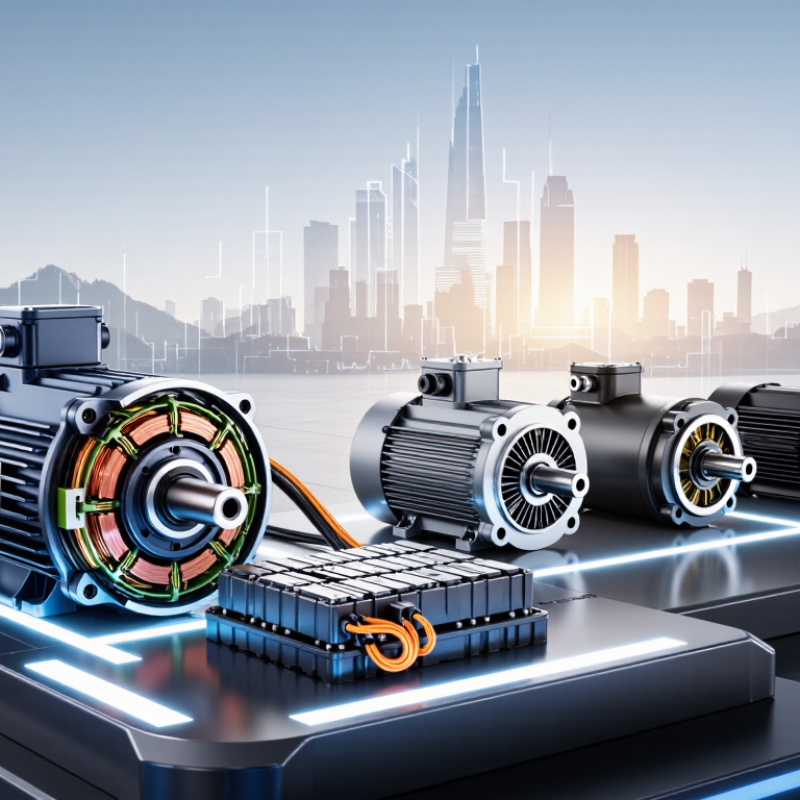
An electric drive motor changes electrical energy into mechanical rotation. In an electric vehicle, the battery sends direct current to an inverter. The inverter creates controlled alternating current for the motor. This current produces a rotating magnetic field inside the stator. The field pushes or pulls magnets on the rotor, creating torque at the shaft.
It happens quickly. Pressing the accelerator changes current, magnetic force, and wheel speed within milliseconds. A reduction gear then increases usable wheel torque. During braking, the same motor can work as a generator. It sends some energy back to the battery. Heat remains a serious issue, though. Copper windings, bearings, and power electronics all need careful cooling. A motor that feels strong during a short test may lose performance after repeated acceleration.
Permanent-magnet motors often provide high efficiency and strong low-speed torque. Induction motors can tolerate demanding operation and avoid some magnet-related materials. Switched-reluctance designs may offer simple construction, but noise and vibration can require extra control. In workshop testing, efficiency depends on temperature, software, load, and driving speed. That makes “best” an incomplete question. The right motor balances torque, efficiency, weight, cooling, repair access, and manufacturing impact. Published efficiency figures also need context. A peak value may not represent daily driving. Even a highly efficient motor can disappoint when its inverter or cooling system is poorly matched.
In 2026, the best electric drive motor depends on the machine, load, and operating environment. Permanent magnet synchronous motors deliver high efficiency and strong torque in compact systems. They suit electric vehicles, robotics, and precision equipment. However, magnets increase material costs and may complicate recycling.
Induction motors remain practical for pumps, fans, and industrial conveyors. They are durable, widely understood, and less sensitive to magnet supply. Their efficiency can fall under light loads.
Brushless DC motors offer simple electronic control and good speed response, especially in small equipment. Synchronous reluctance motors reduce magnet dependence and perform well with advanced inverters.
Switched reluctance motors tolerate heat and harsh conditions, but their noise and torque ripple need careful control. I have seen designs fail because engineers measured peak efficiency, not daily operating efficiency. That difference matters.
Tips: Match the motor to its real duty cycle. Check starting torque, heat dissipation, controller compatibility, and maintenance access. Measure performance after continuous operation, not only during a short bench test. A quieter motor may still waste more energy. Leave room for imperfect data, because field conditions rarely match laboratory results.
What Is the Best Electric Drive Motor in 2026? Performance Factors for Comparing Electric Drive Motors
The best electric drive motor depends on the machine, load profile, and operating environment. Peak power attracts attention, but continuous output often matters more in daily service. A motor producing 100 kW briefly may underperform if heat limits its output after several minutes. Check the torque curve, speed range, and efficiency map. These figures reveal how the motor behaves beyond a showroom specification.
Thermal management deserves close inspection. During testing, I watch winding temperature, coolant flow, and power reduction under sustained load. A strong cooling system protects performance, but it can increase weight, maintenance, and installation complexity. Noise and vibration also affect operator comfort. Smooth torque delivery usually indicates better control calibration, although software cannot correct poor mechanical design.
Voltage compatibility, regenerative braking, and controller response should match the complete drivetrain. Examine efficiency at the speeds your vehicle uses most, not only at the advertised peak point. Protection ratings matter in dust, rain, and repeated washing. Service access matters too. A compact motor is not automatically practical. I have seen efficient designs lose value because technicians needed excessive time for basic inspection. That result is easy to overlook. Testing under real duty cycles remains more reliable than comparing isolated laboratory numbers.
| Motor Type | Peak Efficiency | Typical Continuous Efficiency | Active-Motor Power Density | Peak Torque Density | Typical Maximum Speed | Regenerative Braking | Thermal Performance | Control Complexity | Typical 2026 Application Fit |
|---|---|---|---|---|---|---|---|---|---|
| Radial-Flux Permanent-Magnet Synchronous Motor | 94–97% | 90–95% | 3–8 kW/kg | 5–12 N·m/kg | 12,000–20,000 rpm | Excellent | High; requires effective rotor and stator cooling | Medium–High | Best all-round choice for passenger vehicles and compact traction systems |
| Induction Motor | 93–96% | 88–93% | 2–5 kW/kg | 3–8 N·m/kg | 10,000–18,000 rpm | Excellent | High; robust rotor with good overload tolerance | Medium | High-speed operation, auxiliary drive systems, and applications avoiding permanent magnets |
| Switched Reluctance Motor | 90–95% | 85–91% | 2–6 kW/kg | 4–10 N·m/kg | 15,000–30,000 rpm | Very Good | Very high rotor temperature tolerance | High | Heavy-duty, high-speed, harsh-environment, and magnet-free applications |
| Axial-Flux Permanent-Magnet Motor | 95–98% | 91–96% | 5–12 kW/kg | 8–20 N·m/kg | 8,000–20,000 rpm | Excellent | High, but cooling uniformity is critical | High | Space-constrained vehicles, high-performance platforms, and high torque-to-mass designs |
| Synchronous Reluctance Motor | 92–96% | 87–93% | 2–5 kW/kg | 3–8 N·m/kg | 10,000–20,000 rpm | Very Good | High; no rotor magnets or rotor windings | Medium–High | Industrial traction, cost-sensitive systems, and magnet-reduced designs |
The best electric drive motor depends on the vehicle, duty cycle, and cooling system. Permanent-magnet synchronous motors remain strong for passenger vehicles. They deliver high torque density and efficient operation across city traffic. The International Energy Agency reported more than 17 million electric cars sold globally in 2024. That scale increases pressure to reduce material use and manufacturing complexity.
Induction motors suit applications needing rugged construction and limited reliance on critical minerals. They tolerate demanding conditions, although their efficiency can fall during light-load operation.
Switched reluctance motors remove permanent magnets and can handle high temperatures. However, acoustic noise and torque ripple still need careful control.
Axial-flux motors offer compact packaging and impressive power density. Their production methods remain less mature. This matters more than attractive laboratory results.
Tips:
Match the motor to real routes, not peak specifications. Measure efficiency at common speeds and loads. Check cooling performance in traffic. Ask for independent test data. The U.S. Department of Energy highlights efficiency, cost, durability, and material availability as key electric-drive priorities. A practical test should include winter starts, repeated acceleration, steep grades, and long highway use. No design wins everywhere. My own preference would shift toward magnet-light systems for commercial fleets, but that view needs more field evidence. Laboratory gains can disappoint on dusty roads and uneven schedules.
How to Choose the Best Electric Drive Motor in 2026
The best electric drive motor depends on the vehicle, duty cycle, and operating environment. Global electric car sales exceeded 17 million in 2024, according to the IEA’s Global EV Outlook 2025. This growth increases pressure on efficiency, durability, and supply-chain resilience.
Compare the full torque-speed curve, not only peak power. Permanent-magnet motors usually deliver strong power density and compact packaging. Induction motors avoid permanent magnets but may create higher losses under certain loads. Switched-reluctance designs can reduce material concerns, yet noise and control complexity still need careful testing. A high laboratory efficiency number can mislead. Real roads include hills, traffic, cold starts, and repeated acceleration. Check the efficiency map, inverter compatibility, cooling method, peak temperature, and regenerative-braking performance. The U.S. Department of Energy’s electric-drive research also emphasizes thermal management and system-level efficiency. The motor is only one part.
Tips: Match the motor to its duty cycle. Measure continuous torque, not just peak torque. Ask for test data at realistic temperatures. Confirm the ingress-protection rating for dust and water. Review repair access and expected service life. If rare-earth material exposure matters, compare the complete lifecycle, not only the motor price. I would not choose a motor from a specification sheet alone. Field data is often less impressive, but more honest.
Permanent magnet synchronous motors typically deliver the highest peak efficiency and power density, making them a strong choice for compact electric drive systems. Synchronous reluctance motors can provide high efficiency without permanent magnets, while induction motors remain durable and cost-effective. Switched reluctance motors offer robust construction and strong high-temperature tolerance, although their torque ripple and acoustic performance require careful control.
The values show representative peak-efficiency ranges commonly reported for industrial and vehicle electric-drive applications; actual performance depends on motor size, inverter design, operating speed, cooling, and control strategy.
It converts electrical energy into mechanical rotation. The rotating shaft then helps move wheels, pumps, or other machinery.
The battery sends direct current to an inverter. The inverter produces controlled alternating current for the motor. A rotating magnetic field pushes or pulls the rotor. This creates torque at the shaft.
The inverter changes current almost immediately. Magnetic force rises or falls, changing shaft speed within milliseconds. A reduction gear can increase usable wheel torque.
Yes. During braking, the motor can act as a generator. It sends part of the recovered energy back to the battery. Not all energy returns.
Copper windings, bearings, and power electronics produce heat. Poor cooling can reduce power after repeated acceleration. A motor may feel strong briefly, then weaken under sustained load.
There is no universal best design. Permanent-magnet motors often deliver strong low-speed torque and high efficiency. Induction motors can handle demanding operation. Switched-reluctance designs may simplify construction but can produce more noise and vibration.
Check continuous power, peak power, torque curves, speed range, and efficiency maps. Continuous output often matters more during daily use. Peak numbers can mislead. Compare performance at common driving speeds.
Test it under realistic duty cycles, temperatures, loads, and speeds. Monitor winding temperature, coolant flow, noise, vibration, and power reduction. Laboratory figures alone are not enough. I may overvalue peak efficiency sometimes.
Check voltage compatibility, regenerative braking, controller response, protection ratings, and service access. Dust, rain, and repeated washing can expose weak protection. A compact motor is not always practical. Basic inspection should not require excessive technician time.
An Electric Drive Motor converts electrical energy into mechanical motion, enabling efficient and controllable power for vehicles, industrial equipment, robotics, and other modern systems. In 2026, the main types include induction motors, permanent-magnet motors, synchronous reluctance motors, and switched reluctance motors. Each design offers a different balance of efficiency, torque, speed range, cost, thermal performance, and maintenance requirements.
Choosing the best motor depends on the application rather than a single universal solution. Key comparison factors include peak and continuous power, torque delivery, energy efficiency, operating temperature, durability, noise, control complexity, and total ownership cost. Permanent-magnet designs may provide excellent power density, while induction and reluctance technologies can offer strong durability and reduced material dependence. The ideal Electric Drive Motor should match the system’s voltage, duty cycle, space limitations, cooling method, control system, and performance goals, ensuring reliable operation and efficient long-term results.
