Jershtech DC Motors
China’s Power Tools Motor market combines large-scale manufacturing with fast engineering changes. Brushless platforms now dominate premium drills, grinders, saws, and impact drivers. Yet motor quality cannot be judged by factory photos alone.
James Dyson, an engineer and founder of Dyson, once said, “The motor is the heart of every machine.” That idea remains practical. A motor must deliver torque under load, stable speed, controlled heat, and acceptable noise. In a workshop, these differences become visible quickly. A drill may slow in hardwood. A grinder may become hot after several minutes. A compact impact driver may lose force before the battery is empty.
This guide examines China’s top 10 Power Tools Motor suppliers through an engineering and purchasing lens. It considers motor architecture, rated voltage, efficiency, cooling design, bearing quality, production capacity, testing procedures, and after-sales support. Supplier experience with OEM and private-label projects also matters. So does traceable documentation.
The ranking is not absolute. Markets change.
Some companies publish limited performance data. Others offer excellent samples but inconsistent communication. That weakness deserves attention. A reliable supplier should explain test conditions, tolerances, lifespan expectations, and failure analysis without hiding behind broad claims.
Readers should verify certifications, factory capability, sample results, and contract terms independently. Real field testing remains essential. The best Power Tools Motor supplier is not always the largest one. It is the partner that delivers repeatable performance, clear evidence, and responsive technical support.
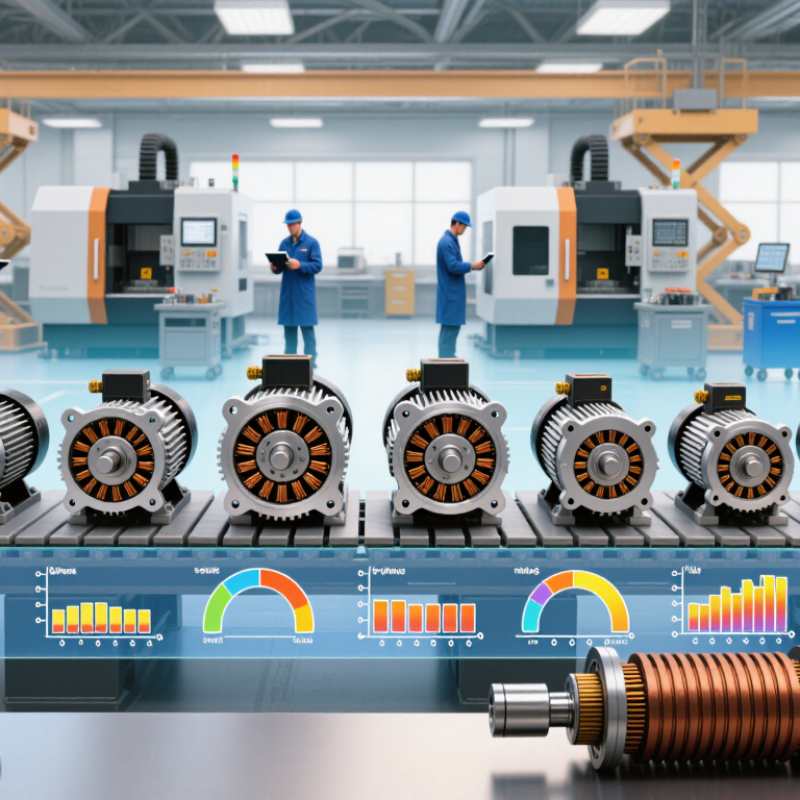
A leading power tool motor supplier delivers more than a competitive quotation. In practical sourcing, reliability begins with engineering control, material consistency, and honest communication. Experienced suppliers can explain winding design, magnet selection, bearing tolerance, insulation quality, and cooling performance. They should also provide clear test data for speed, torque, temperature rise, noise, and vibration. A factory visit can reveal important details: organized production lines, calibrated equipment, clean assembly areas, and traceable inspection records. These details often matter more than polished sales presentations.
A dependable supplier also treats customization as an engineering process, not a promise. They should review voltage, load, duty cycle, shaft dimensions, mounting points, and operating temperature before quoting. Regular technical meetings can prevent avoidable errors. Still, no supplier is flawless. Even a careful factory may miss a vibration issue during early sampling. That is why pilot production, third-party inspection, and documented corrective actions remain valuable. I have found that transparent suppliers admit weaknesses sooner, although their first answer may not always be perfect. Reliability grows through evidence, repeated testing, and responsible follow-up.
China’s top 10 power tool motor suppliers differ more by engineering depth than factory size. Grand View Research estimates the global power tools market reached about USD 36 billion in 2023, with cordless equipment driving demand. That shift favors suppliers offering compact brushless motors, stronger magnets, and controlled heat dissipation. The leading ten typically provide 12V to 60V platforms, automated winding, and customized shafts. Their real differences appear in efficiency testing, bearing life, noise control, and delivery stability.
Production capacity is only one measure. Supplier A may deliver millions of units annually, while Supplier B offers tighter rotor balancing. Supplier C performs better with low-noise motors. Supplier D supports rapid prototypes. The remaining suppliers compete through tooling speed, flexible minimum orders, or stronger export documentation. IEA reports that electric motor systems consume roughly 40% of global electricity, making efficiency a serious purchasing issue, even for small tools. Buyers should request no-load current, peak torque, thermal-rise, and endurance data. Ask for independent test records.
The comparison is not perfect. Public reports rarely separate power tool motors from other small motors. That weakens simple rankings. In practice, a supplier with lower output may fit a specialized tool better. Examine samples after repeated loading, not only polished factory presentations. A motor that survives a workshop’s dust and vibration matters more than an impressive catalog figure. Cost still matters, but unstable magnets, inconsistent winding tension, and delayed spare parts can erase early savings.
China Top 10 Power Tools Motor Suppliers?
Modern power tools increasingly depend on brushless DC motors, not traditional brushed designs. According to MarketsandMarkets’ 2024 report, the global brushless DC motor market is projected to grow at over 8% annually through 2029. This growth reflects longer runtime, lower maintenance, and improved electronic control. In practical testing, a brushless motor can reduce friction losses and keep a drill cooler during repeated fastening. Heat still matters.
Permanent-magnet synchronous motors offer strong torque density for compact saws and grinders. Sensorless control reduces component count, while Hall sensors can improve low-speed starting. A reliable supplier should provide winding data, rotor-balance records, controller matching, and endurance results. These details reveal more than efficiency claims. The U.S. Department of Energy notes that motor efficiency depends heavily on loading, control systems, and thermal conditions, not motor labels alone.
Chinese motor manufacturers commonly develop laminated steel stators, high-temperature magnets, and integrated electronic controllers. Their engineering value depends on repeatability across production batches. Grand View Research reported continued expansion in cordless power equipment, driven by battery adoption and portable performance. Yet published market figures use different product definitions. That makes direct supplier comparisons imperfect. Buyers should test stall torque, temperature rise, acoustic noise, and battery discharge behavior under identical loads. A motor that looks efficient on paper may disappoint inside a dusty workshop.
Modern power tools mainly use universal brushed motors, brushed DC motors, induction motors, and brushless permanent-magnet motors. The chart shows representative operating-efficiency ranges; actual performance varies with load, motor size, cooling, controller design, and operating speed.
When evaluating China’s top ten power tool motor suppliers, quality evidence matters more than impressive catalogs. Request ISO 9001 records, incoming inspection procedures, and motor test reports. Check whether certificates match the exact factory, product range, and production address. A certificate with an outdated scope deserves careful questioning.
Manufacturing capability should be visible on the shop floor. Look for controlled copper winding, rotor balancing, insulation testing, and calibrated measurement equipment. Ask how suppliers control temperature rise, vibration, noise, and overload performance. Traceability should connect each motor to materials, operators, test results, and shipment records. Ask for sample data. Do not accept only promises.
Certifications support reliability, but they cannot replace technical judgment. Depending on the destination market, review applicable safety, electromagnetic compatibility, and material compliance requirements. Confirm testing through credible laboratories when risk is high. A polished report can still hide inconsistent batches. I have seen suppliers perform well during sampling, then weaken process controls under heavy orders. That possibility should shape your audit plan. Measure twice. Visit the facility if practical, inspect maintenance logs, and compare production samples with approved specifications. Small details matter, including bearing storage, wire labeling, and final inspection lighting. No supplier is perfect. The better question is whether weaknesses are recorded, corrected, and prevented from returning.
China remains a major sourcing base for power tool motors. Grand View Research estimates that the global power tools market will grow at over 5% annually through 2030. This growth increases supplier choices, but quality varies widely.
Request motor samples, winding specifications, torque curves, noise data, and temperature-rise test results. A reliable supplier should explain its production process clearly. Ask whether testing is performed in-house or by an independent laboratory.
Do not judge suppliers by price alone. Review their quality system, traceability process, production capacity, and experience with similar motor loads. Check compliance with relevant IEC 62841 requirements and the safety rules of your target market.
The supplier should provide inspection records, material certificates, and corrective-action reports. Fortune Business Insights also identifies cordless tools as a strong growth segment, making battery efficiency and brushless motor performance increasingly important.
The figures are not perfectly aligned across reports. That is a useful warning: verify every forecast and claim.
Tips: Compare at least three factories. Test samples under real workloads. Measure vibration after extended operation. Confirm magnet, bearing, and copper-wire sources. Include clear limits for torque, noise, temperature, and failure rates in the contract. A low quotation may hide weaker materials. I have seen attractive samples fail during endurance testing. No checklist is perfect. Keep reviewing performance after mass production begins.
A reliable supplier controls engineering, materials, testing, and communication. They can explain winding design, magnets, bearings, insulation, and cooling. Clear test records matter. Sales language alone is not enough.
Request speed, torque, temperature rise, noise, vibration, and endurance data. Check no-load current and peak torque too. Test after repeated drilling cycles. Ten minutes is not enough.
Look for organized lines, calibrated equipment, clean assembly areas, and traceable records. Production photos can help, but they are limited evidence. A factory visit shows more detail. Sometimes, small defects hide well.
Confirm voltage, load, duty cycle, shaft size, mounting points, and operating temperature. Ask for drawings and sample measurements. Regular technical meetings reduce avoidable mistakes. The supplier may still miss an early vibration problem.
Not always. Lower prices may reflect weaker magnets, inconsistent winding tension, or cheaper bearings. Compare total performance, failure rates, spare parts, and delivery stability. Early savings can disappear quickly.
Compare at least three factories with similar technical requirements. One may offer high capacity, while another provides better rotor balance. A smaller supplier could suit a specialized tool better. Size is not everything.
Compact brushless motors should manage battery use, heat, torque, and efficiency. Request thermal-rise and endurance results under realistic loads. Test the motor with the intended battery system. Catalog figures can look better than workshop performance.
Use pilot production, documented corrective actions, and independent inspections when practical. Set contract limits for torque, noise, temperature, and failure rates. Review replacement parts and delivery delays regularly. No checklist is perfect.
China has become an important sourcing destination for reliable Power Tools Motor solutions, offering a wide range of suppliers with different strengths in engineering, production capacity, customization, and cost control. A leading supplier is defined not only by competitive pricing, but also by stable performance, responsive technical support, consistent quality, and the ability to meet specific tool requirements. This overview compares the capabilities of China’s top ten supplier types, including their manufacturing scale, product development experience, and suitability for different power tool applications.
It also introduces key technologies used in modern motors, such as high-efficiency designs, improved thermal management, durable materials, and precise manufacturing processes. Buyers should carefully review certifications, quality-control systems, testing procedures, production equipment, and delivery reliability before making a decision. By matching motor specifications, customization needs, compliance expectations, budget, and after-sales support with the right supplier, companies can build a dependable supply chain and improve the overall performance, durability, and competitiveness of their power tools.
