 Jershtech DC Motors
An HVAC Motor is the powered component that moves air through a heating, ventilation, and air-conditioning system. In a furnace, air handler, or outdoor condenser, it converts electrical energy into rotation. That rotation drives a blower wheel or fan blades, moving air across filters, coils, and ducts. Simple in outline. Less simple in practice.
When a thermostat calls for heating or cooling, system controls signal the motor to operate. Depending on its design, it may run at one speed, several fixed speeds, or adjust output electronically. Permanent split capacitor motors and electronically commutated motors work differently, so their controls, efficiency, and service needs can vary. Bearings, windings, insulation, and airflow around the motor also influence its performance. A faint hum, weak airflow, or unusual vibration can signal a problem, but none proves the motor has failed. Dirty filters, blocked airflow, wiring faults, and control issues can create similar symptoms. That distinction matters.
This guide explains common HVAC motor types, how they work, and what can affect their efficiency and service life. It also describes practical warning signs and useful questions to raise during maintenance. Motor labels and wiring diagrams provide important clues, though they do not tell the whole story. The explanation can sound tidier than real troubleshooting. Because equipment designs differ, check the manufacturer’s documentation and leave electrical diagnosis or repair to a qualified technician.
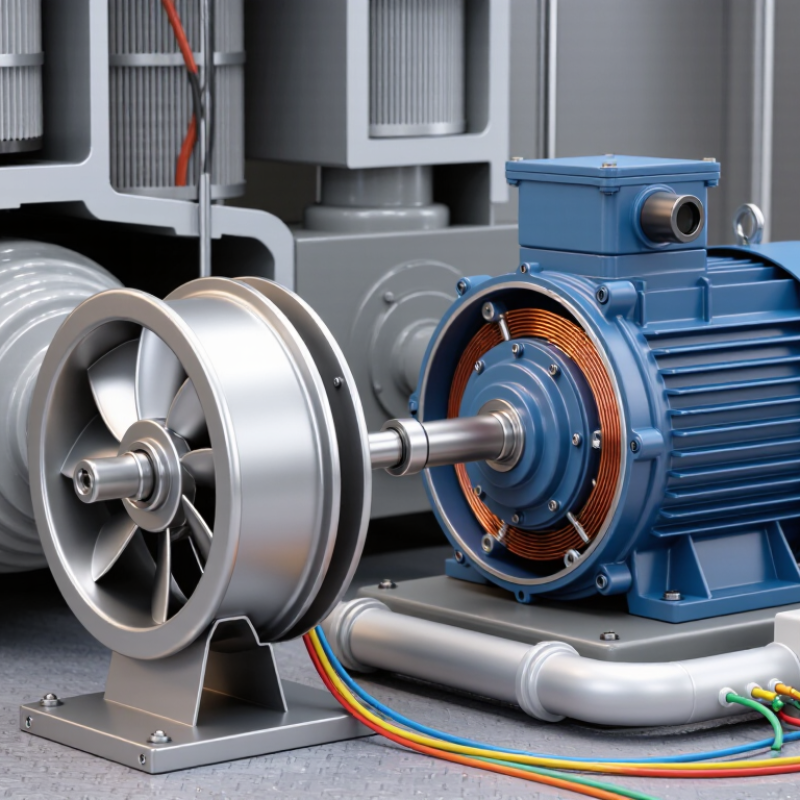
An HVAC motor is an electromechanical component that turns electrical energy into rotational motion. Its core function is to drive moving parts that help a heating or cooling system transfer and distribute heat. A blower motor spins a fan, pushing air through ducts and across a heat exchanger. In many systems, a separate motor powers the compressor, which circulates refrigerant through the cooling cycle. Not every HVAC motor does the same job.
You can picture the blower motor starting as the thermostat calls for heating or cooling. Its shaft turns the fan, and air moves across metal fins before reaching the rooms. The motor’s speed affects airflow, comfort, and energy use. Some systems use variable-speed controls to adjust output rather than running at one fixed rate. Small differences matter.
In practice, the definition can seem too neat. A motor depends on its bearings, electrical supply, controls, and cooling airflow to operate reliably. A worn bearing may produce a low rumble; restricted airflow can make a motor work harder. These clues do not prove the motor has failed, though. A technician checks the full system before identifying the cause. The motor is important, but it is only one part of the process.
| Topic | What It Means | How It Works in an HVAC System |
|---|---|---|
| Definition | An HVAC motor is an electric motor that converts electrical energy into mechanical rotation. | Its rotating shaft drives equipment that moves air or circulates fluids through heating, ventilation, and air-conditioning systems. |
| Core function | Provide controlled mechanical motion for system components. | Depending on its application, the motor turns a blower, fan, pump, or compressor-related mechanism. |
| Basic operating principle | Electric current creates magnetic fields that produce torque on the motor’s rotor. | The rotor turns inside the stationary stator; the motor’s shaft transfers that rotation to the connected load. |
| Stator and rotor | The stator is the stationary part; the rotor is the rotating part. | Magnetic interaction between these parts generates the rotation used to operate HVAC equipment. |
| Blower motor | A motor that drives a blower wheel or fan in an air-handling system. | It moves air through filters, heating or cooling components, ducts, and room outlets. |
| Condenser fan motor | A motor that turns the outdoor unit’s fan. | The fan moves outdoor air across the heat exchanger to help transfer heat between the refrigerant system and the surrounding air. |
| Induction motor | A common AC motor in which current is induced in the rotor by the stator’s magnetic field. | It operates with a small difference between the rotating magnetic field’s speed and the rotor’s speed, known as slip. |
| Permanent-split-capacitor (PSC) motor | A single-phase AC motor that uses a capacitor continuously in its auxiliary winding circuit. | The capacitor helps create the phase difference needed for motor operation; speed is generally determined by the motor design and supply frequency. |
| Electronically commutated motor (ECM) | A brushless motor with integrated electronic controls. | Its controls switch current through the motor windings and can adjust operation to meet system airflow or control requirements. |
| Speed and airflow | Motor speed affects how quickly a connected fan or blower turns. | Airflow also depends on the fan design and system resistance, including duct layout and filter condition. |
| Control signals | Electrical inputs that start, stop, or regulate motor operation. | Depending on the equipment, control may come from a thermostat, relay, control board, or dedicated motor electronics. |
| Key nameplate ratings | Common ratings include voltage, frequency, current, horsepower or watts, speed, and duty rating. | These values help determine whether a motor is suitable for the equipment and electrical supply; replacement specifications should match the system requirements. |
| Signs of a problem | Possible signs include unusual noise, overheating, failure to start, or reduced airflow. | Similar symptoms can also result from electrical, control, airflow, or mechanical issues, so diagnosis should consider the complete system. |
Note: Motor types, controls, and ratings vary by HVAC equipment and application. Always follow the equipment documentation and applicable electrical safety requirements.
It turns electrical energy into motion. That motion can move air or support the heating and cooling cycle.
Magnetic fields inside the motor interact with its rotor. The rotor turns, and a shaft transfers motion to a fan or blower wheel. Small details matter.
A blower motor is usually inside a furnace or air handler. Outdoor equipment may contain a condenser-fan motor. Exact locations vary.
A blower motor moves air through ducts and across coils. A compressor motor supports refrigerant circulation. Different jobs.
Yes. The speed affects airflow and how evenly rooms receive heated or cooled air. Some systems adjust speed instead of using one fixed rate.
New humming, rattling, weak airflow, or vibration can be clues. They do not prove the motor has failed. The cause may be elsewhere.
Switch the equipment off before inspecting it. Do not open electrical compartments while power is connected. Note when the sound occurs.
No. A qualified technician can check the motor, controls, bearings, and airflow. The simple explanation may be wrong. Keep return grilles clear.
An HVAC Motor is the component that turns electrical energy into the motion needed to move air, water, or other parts within a heating and cooling system. Its core function is to drive equipment such as fans and blowers, helping distribute conditioned air and support the system’s operation. Common components include a housing, a rotor, a stator, bearings, and electrical connections. Together, these parts create and guide rotational movement.
When electricity flows through the motor’s windings, it produces magnetic forces that make the rotor turn. That rotation can power a fan, blower, or pump, depending on the system’s design. HVAC systems use different motor types to suit their operating needs, including single-speed, multi-speed, and variable-speed designs. Motors may be found in indoor air handlers, furnaces, outdoor units, and ventilation equipment, where they help circulate air or support heat transfer throughout a building.
