Jershtech DC Motors Jershtech DC Motors

7 Tips for Choosing the Right Direct Current Motor?

Time:2026-09-13 Author:Ethan
0%

A reliable motor choice begins long before the purchase order. A Direct Current Motor must match the machine, not merely its advertised speed. In workshops, small mismatches appear quickly: a conveyor hesitates under load, brushes wear unevenly, or a power supply overheats. These details make selection practical rather than theoretical.

This guide presents seven useful tips for choosing the right motor. It considers voltage, torque, speed range, duty cycle, efficiency, control method, and maintenance needs. Each factor affects performance in a different way. A motor rated at 24 volts may still fail when starting torque exceeds the controller’s capacity. That is easy to overlook. Measure twice.

Check the datasheet, then compare its figures with measured operating conditions. Manufacturer documentation, recognized testing practices, and advice from qualified engineers provide stronger evidence than sales language. Still, specifications can be incomplete or interpreted too generously. Leave room for uncertainty.

Think about the real environment. Dust, heat, vibration, frequent starts, and limited access can change the best option. A quiet laboratory motor may struggle beside a packaging line. A low-cost model may become expensive after repeated servicing. Record the load, starting pattern, available space, and expected service life before comparing products. Careful notes help reveal assumptions that seemed obvious. They may also expose an uncomfortable truth: the cheapest motor is rarely the cheapest system. These tips support a safer, more informed decision without pretending that one motor suits every application.
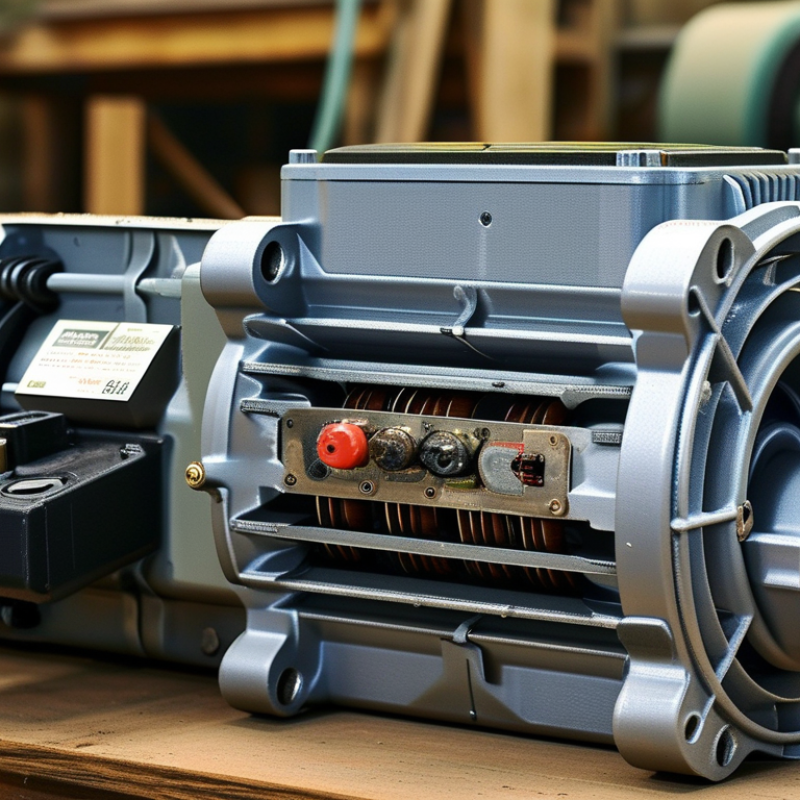
7 Tips for Choosing the Right Direct Current Motor?

Define the Motor’s Intended Application and Operating Conditions

7 Tips for Choosing the Right Direct Current Motor

Define the Motor’s Intended Application and Operating Conditions

A direct current motor should match the real machine, not only its rated voltage. Identify the load type, starting torque, speed range, duty cycle, and available installation space. A conveyor may need steady torque, while a valve actuator may require brief, repeated starts. Record shaft loads during startup, not just during normal running. Small details matter.

The International Energy Agency reports that electric motor systems consume roughly half of global electricity. The U.S. Department of Energy also reports that motor-driven equipment uses about 68% of industrial electricity. These figures make correct sizing more than a performance choice. It affects energy use, heat, and maintenance. Still, field measurements can be imperfect. A short monitoring period may miss seasonal loads or unusual jams.

Tip 1: Measure the actual load and speed profile for several operating cycles.

Tip 2: Check ambient temperature, dust, moisture, vibration, and altitude before selecting insulation and protection.

Tip 3: Confirm whether brushes, commutation, or maintenance access suit the site.

A motor running near its limit may overheat quietly. An oversized motor may waste energy and respond poorly at low load. Review the decision with a qualified engineer, then test the motor under the harshest expected condition.

Compare Voltage, Current, Torque, and Speed Requirements

7 Tips for Choosing the Right Direct Current Motor

Choosing a direct current motor starts with the actual voltage available in your system. A 12-volt supply should not be paired with a motor that needs 24 volts. Check the voltage under load, not only the value printed on the power supply. A long cable can create a small but important voltage drop. Measure it.

Current requirements deserve equal attention. A motor may draw modest current while spinning freely, then demand several times more during startup or sudden loading. Your controller and power source must handle this peak safely. A fuse protects wiring, but it does not correct an undersized supply. I have seen test setups fail because engineers checked running current only.

Torque and speed must match the working task. A conveyor carrying a heavy box needs starting torque, while a small fan usually needs steady speed. Review the motor’s torque-speed curve, because rated speed often changes under real load. Include friction, acceleration, and a practical torque margin. Too much margin can increase cost and energy use. Too little can cause stalling.

Consider speed control, operating temperature, duty cycle, and noise before choosing. A motor running for ten seconds behaves differently from one operating continuously. Do not trust one calculation completely. Test a sample with the intended load, measure current and temperature, and record speed over time. Small errors in assumptions can become large problems in service.

Select the Appropriate Motor Type and Control Method

Choosing the right direct current motor starts with the load, not the catalog. Brushed DC motors suit simple, cost-sensitive equipment with intermittent duty. Brushless DC motors fit longer operating cycles and lower maintenance needs. Servo motors are better when position, speed, and torque must be tightly controlled. The International Energy Agency estimates that electric motor systems use 43–46% of global electricity. A small efficiency mistake can become a large operating cost.

Match the control method to the application. PWM voltage control works for basic speed adjustment, but it may produce torque ripple at low speed. Closed-loop current control responds better to changing loads. Add an encoder when position accuracy matters. For a conveyor, test acceleration, stopping distance, and stall behavior with the real payload. Do not size the motor only by its rated power. Check peak torque, thermal limits, duty cycle, and available DC voltage. The U.S. Department of Energy reports that motor-driven systems consume about 23% of U.S. electricity, making control quality a practical design concern.

Protection deserves equal attention. Use current limiting, thermal sensing, and controlled startup. Confirm electromagnetic compatibility before production testing. I once underestimated cable losses in a low-voltage system; the motor reached speed slowly and overheated under load. That mistake was avoidable. Datasheets also hide assumptions, such as ambient temperature and ideal cooling. Recheck them. A laboratory result may not survive dust, vibration, or repeated starts. The best choice is the motor and controller that perform reliably under actual operating conditions.

7 Tips for Choosing the Right Direct Current Motor

Select the Appropriate Motor Type and Control Method

Chart: Representative efficiency at rated load for common motor types. Actual results vary with load, speed, controller quality, operating temperature, and motor design.

Selection tips: Define the required torque and speed, check the duty cycle, compare efficiency, select the appropriate motor type, match the control method, evaluate maintenance requirements, and confirm the available voltage and installation environment.

Evaluate Efficiency, Duty Cycle, Size, and Installation Constraints

7 Tips for Choosing the Right Direct Current Motor?

Choosing a direct current motor starts with efficiency under the real load, not the catalog peak. A motor may appear efficient at one speed but waste energy during frequent starts. Check current draw, operating voltage, torque, and speed across the full working range. Small losses become noticeable after thousands of operating hours. Duty cycle matters more than a dramatic rating. Define starting, running, braking, reversing, and idle periods. Short bursts still create heat. Real heat tells the truth.

Match the motor’s frame, shaft, mounting holes, and cable outlet to the available space. Measure twice. Leave room for airflow, tools, guards, and maintenance access. Check ambient temperature, dust, moisture, and vibration before selecting protection levels. A motor that fits a drawing may fail beside a hot enclosure. Confirm starting current and controller capacity, especially when the load begins under pressure. Installation constraints often decide the practical motor size.

Use efficiency curves and thermal data measured under comparable conditions. Ask how torque changes at low speed, and check whether continuous operation requires additional cooling. I have seen projects choose a smaller motor to save space, then accept frequent overheating. That decision looked reasonable on paper. It was not. Consider shaft alignment, mounting stiffness, replacement access, and expected service intervals. A clear specification is useful, but field measurements should challenge it.

Review Reliability, Maintenance Needs, Cost, and Supplier Support

7 Tips for Choosing the Right Direct Current Motor?

Review Reliability, Maintenance Needs, Cost, and Supplier Support

Check the motor’s duty cycle before comparing prices. A motor rated for continuous operation may perform poorly under repeated starts. Review test reports, insulation class, bearing life, and operating temperature. Ask for evidence. Confirm the stated service life matches your load, speed, and environment. An IP rating also matters when dust, moisture, or oil surrounds the equipment. Small details matter.

Study maintenance access carefully. Can technicians replace brushes without removing the motor? Are spare brushes, bearings, and couplings available locally? Record inspection intervals for commutators, terminals, and cooling passages. Measure before ordering. In my experience, a cheap motor becomes expensive when a simple replacement stops production for several days. Still, maintenance estimates are not perfect. Actual wear depends on alignment, vibration, and operator habits.

Calculate total ownership cost, not only the purchase price. Include electricity use, controls, downtime, spare parts, installation, and disposal. Compare efficiency at the motor’s real working load, rather than its maximum rating. Then examine supplier support. A dependable supplier should provide drawings, wiring data, troubleshooting guidance, and realistic delivery times. Ask whether engineers can answer technical questions after installation. Request a clear warranty process and documented response times. One overlooked issue is training: operators may need practical guidance for cleaning, brush inspection, and fault reporting. That support can protect reliability more than a small discount.

7 Tips for Choosing the Right Direct Current Motor? - Review Reliability, Maintenance Needs, Cost, and Supplier Support

Tip Selection Dimension Key Data to Review Practical Benchmark or Requirement Why It Matters Recommended Action
1 Match voltage and speed Rated voltage, no-load speed, rated speed, speed range, and allowable voltage tolerance Select a motor whose rated voltage matches the available DC supply. Confirm that the required operating speed falls within the continuous-duty speed range. Incorrect voltage can cause overheating, excessive brush wear, poor commutation, or insufficient torque. Create a requirement sheet listing supply voltage, minimum and maximum speed, duty cycle, and speed-control method before requesting quotations.
2 Verify torque and load capacity Continuous torque, peak torque, startup torque, load inertia, and acceleration time For variable loads, allow a practical design margin of approximately 20–30% above the calculated continuous torque, while checking peak torque separately. A motor can reach its rated speed yet still fail to start, accelerate, or withstand short-term load peaks. Calculate torque from the actual mechanism, including friction, gravity, gearing, acceleration, and transmission losses.
3 Assess reliability and service life Duty cycle, bearing life, insulation class, thermal rating, environmental protection, and failure history For continuous operation, confirm the motor is rated for the required duty. Common insulation classes include Class B at 130°C and Class F at 155°C maximum insulation-system temperature. Heat, overloads, contamination, and repeated starts are major contributors to premature motor failure. Request temperature-rise data, life-test conditions, protection ratings, and documented quality-control procedures.
4 Compare maintenance needs Brush and commutator wear, bearing replacement, lubrication, cleaning, inspection frequency, and spare-part availability Brushed motors require periodic brush and commutator inspection. Brushless DC motors eliminate brush replacement but require an electronic commutation controller. Maintenance labor, unplanned downtime, and replacement parts can exceed the initial motor price over the operating life. Estimate total maintenance hours and replacement-part costs over the expected service period, not only the purchase price.
5 Evaluate efficiency and operating cost Motor efficiency, controller losses, average load, operating hours, electricity price, and heat dissipation Compare efficiency at the actual operating point rather than relying only on the peak-efficiency figure shown on a datasheet. A motor operating 4,000 hours per year can accumulate substantial energy and cooling costs from even modest efficiency differences. Use annual energy cost: Power input (kW) × operating hours × electricity rate, then include controller and cooling loads.
6 Calculate total cost of ownership Purchase price, controller cost, installation, energy, maintenance, downtime, spare parts, and disposal Use a multi-year cost comparison and include at least one planned maintenance scenario and one unplanned-failure scenario. The least expensive motor to purchase may have higher energy use, more maintenance, or greater downtime risk. Rank options by total cost of ownership and payback period instead of initial price alone.
7 Check supplier support and documentation Datasheet completeness, sample availability, customization, lead time, warranty terms, technical response time, and lifecycle continuity Require dimensional drawings, wiring information, performance curves, test reports, change-notification procedures, and clearly stated warranty conditions. Reliable technical support reduces integration delays and helps maintain consistent replacement parts throughout the product life. Score suppliers using documented criteria for response time, quality records, delivery performance, after-sales service, and spare-part continuity.
Note: Motor performance and service life depend on load profile, temperature, installation, controller settings, contamination, duty cycle, and maintenance practices. Always confirm final selections against the manufacturer’s technical data and applicable safety requirements.

FAQS

What should I identify before choosing a direct current motor?

Define the load type, starting torque, speed range, duty cycle, and installation space. The motor must fit the machine.

Why should I measure the real load instead of trusting rated values?

Rated values may miss startup force, friction, jams, or changing loads. Record shaft load and speed across several cycles.

How should I check the available voltage and current?

Measure voltage while the motor is operating. Long cables can create voltage drops. Check startup current, too.

What happens if the motor has too little or too much torque?

Too little torque may cause stalling. Too much can increase cost, energy use, and poor low-load response.

How does duty cycle affect motor selection?

Starting, running, braking, reversing, and idle periods create different heat patterns. Even short bursts add heat.

What environmental conditions should I consider?

Check temperature, dust, moisture, vibration, and altitude. A hot enclosure can damage a motor that fits perfectly on paper.

What physical details must match the installation?

Check the frame, shaft, mounting holes, cable outlet, airflow, guards, and maintenance access. Measure twice.

How can I confirm the motor will work in practice?

Test a sample with the intended load. Measure current, temperature, speed, and startup behavior. One calculation is not enough.

Should I choose a smaller motor to save space?

Only if thermal testing supports it. A smaller motor may overheat during repeated starts or continuous operation.

When should a qualified engineer review the choice?

Review the selection when loads are uncertain, conditions are harsh, or peak current is difficult to estimate. Field data can be imperfect.

Conclusion

Choosing the right Direct Current Motor begins with clearly defining its intended application and operating environment. Consider the load, available power source, ambient temperature, humidity, space limitations, and expected operating hours. Then compare the required voltage, current, torque, and speed to ensure the motor can perform reliably without overheating or being overloaded. Selecting a suitable motor type and control method is also essential, as different designs provide different levels of starting torque, speed regulation, noise, and control flexibility.

In addition, evaluate efficiency, duty cycle, physical size, mounting options, and installation requirements. A motor that matches the equipment’s operating pattern can reduce energy use and extend service life. Reliability and maintenance needs should also be reviewed, including access to replacement parts and the ease of inspection or repair. Finally, compare the total cost of ownership rather than focusing only on the initial purchase price, and choose a supplier that offers dependable technical support, clear specifications, and responsive after-sales service.

Ethan

Ethan

Ethan is a seasoned marketing professional with a deep expertise in our company's innovative product line. With a passion for sharing knowledge and insights, he takes the lead in regularly updating our corporate blog, where he explores industry trends, product features, and effective marketing......